Why is housing so expensive, part 2
In this part of the article, I am going to look at three of the important names in politics, whose work has helped to ensure that you can’t afford to buy a house. This covers three different sets of policies, all of which contribute to the price of housing..

Duncan Sandys – as MInister of Housing Duncan Sandys created the idea of Green Belt land, and encouraged councils to enact guidelines in their planning policies to ensure that a permanent ring of undeveloped land existed around Britain’s cities. This was to prevent something called Urban Sprawl, to stop the cities becoming huge and sprawling and spread out. The practical result of this is that our cities are unable to grow, and available land within the green belt circle becomes ever more expensive as time goes on. 13% of England is Green Belt land. That’s more land than the cities themselves. Duncan Sandys didn’t know it at the time (though it could have been predicted) but his system created something called artificial scarcity in city housing. This artificial scarcity further pushes up the prices of land. Over the years landowning groups have encouraged politicians to present Green Belt as an environmental protection, so successfully that most people these days believe that Green Belts are about fresh air, environmental protections, and open access to the countryside for stressed urban working classes! To be clear, I think that we need policies to protect from urban sprawl and to ensure that the countryside doesn’t disappear under acres of concrete, but the current laws create artificial scarcity of available land in the cities and should be reworked..

Moving onward to the 1980s- Margaret Thatcher wasn’t the inventor of Right To Buy[1], as various councils had used it as a policy since the 1960s. There was nothing specifically wrong with allowing council tenants to purchase their properties, but the conditions attached by Thatcher ensured that the properties could not be replaced.
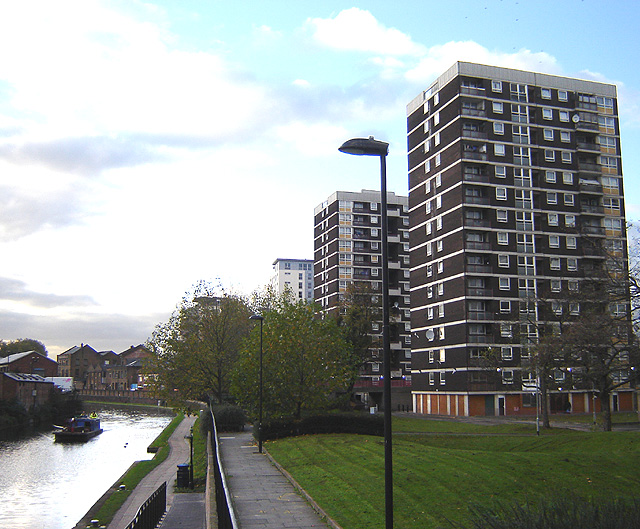
As a consequence, social housing is now incredibly difficult to get and goes only to very neediest. Many of those needy people may not appear deserving to outsiders. They may have many children, serious mental health conditions, a history of offending due to their mental health problems, they may well be refugees from oppressive states who can’t speak English. All of these factors make it seem like “the deserving poor”, those of us who work, or are too sick to work but not sick enough to receive social support, those of us who aren’t offenders, who can look after our properties, who are British taxpayers who have long paid into the system, that we are not receiving support whilst outsiders are. It seems unfair!
We are turned against each other by politicians and the media, fighting over who deserves to receive state help whilst a third of the properties sold under Right To Buy are no longer lived in by their owner. These are generating income for people who already own property, making it harder and more expensive for poorer people to get somewhere to live.
The mix of leasehold and freehold properties on an estate has created terrible problems in maintenance as well. Leaseholders are expected to pay a share of repairs, but sometimes they refuse (as these repairs can be incredibly expensive), leading to delays whilst legal arguments go on. I have personally seen essential repairs to keep out water put back by years by non-residential leaseholders unwilling to pay their share, whilst children live in damp and unsanitary environments for long periods. I have seen a council being sued by tenants and leaseholders at the same time, one party demanding that works are done and the other demanding that they are not. It was terrible legislation that has caused far more damage than it has done good and continues to do harm today. Just ask yourself, why is that the Tories only gave Council Tenants right to buy? Why weren’t private tenants given the right to buy? Why was it our shared property that was given away? What is the difference between a private tenant and a council tenant that one should have this right and not the other? This is not to say that it is wrong to have bought your house under Right To Buy; but it was wrong for the state not to replace that property to give other people a chance to get on the property ladder.
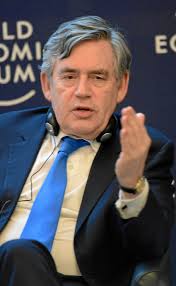
Gordon Brown – In order to improve the economy, the Labour governments’ further deregulated the finance sector[2]. Deregulation is the process of removing legal checks and rules on lending. This made it easier and cheaper for banks to lend money. Millions of people who could not previously afford a mortgage now found it within their grasp, whilst those who already owned a property were able to remortgage it and buy a property (or multiple properties) to let. At the same time they deliberately didn’t build a lot of housing, creating a strong market for property owners, and making property a better investment than keeping your money in a bank. Lending has now changed a bit, meaning that once again the poor are unable to access the housing market. Brown’s economic policies have deliberately impoverished the future generations in order to give a few years of a strong economy.
On Gordon Brown
The housing boom of the late 90s and 00s was created by banks being willing to lend people money easily and cheaply. This enabled a lot of people to buy houses in a relatively short period of time. This meant that sellers upped their prices, and so people paid more for their houses. Now that has stopped, but interest rates are still low and prices are high. This means that people who have houses can afford more houses – they can borrow against their existing properties safe in the knowledge that the rental income is greater than the mortgage repayment costs, not even taking into account the house price inflation itself.
Continuing house price rises indicates that sellers of houses are confident that wealthy people are buying houses; and that buyers are confident that house prices won’t drop. In London especially we are now seeing foreign investors buying up properties and leaving them empty. They are paying what they are asked, so the asking price keeps getting raised. This will keep on happening until someone loses confidence! No longer do sellers have to pitch their price just right, no ordinary person can afford to buy a property now, if it’s too much for a local family, then someone in China or Dubai will buy it. British properties bought by foreign investors and left empty remove that property from the local community, from the rental market, and also push prices up even more, making more people trying to get cheaper properties, and pushing those prices up too!
The winners were those who were able to jump on the cheap credit boom and buy a house, or multiple houses. The losers are those of us who were too young, or too poor to take advantage.
Recently the purchase of houses in fashionable areas by landlords who let out properties to holiday lets via the internet has the effect of removing many properties from the community. These properties are generally bought without mortgages, so that the rental income is all profit (and above what the local rental market would pay for long-term lets). This reduces supply whilst increasing demand, and pushes up the prices of both rental and purchase markets.

So we can see that a series of government actions have created an economy where housing is too expensive for the ordinary person to afford. Roughly 70% of British people own all the property and land in the UK. The 30% that are left have to fight it out amongst themselves. But there is more than enough land to build houses, and there are already more empty properties than there are people without houses. So why are we in a housing crisis? Why haven’t the government changed the rules?
There are a number of reasons why the governments since Brown have done almost nothing to make the necessary changes that will allow us all to afford houses.
Firstly, because the government themselves benefit from this arrangement. Many MPs and Peers are landowners, landlords, or both. Any change to this system would cost them money. Why would they do anything that would reduce their income significantly?
Secondly, and maybe more importantly, because it would be an electoral calamity. 70% of the population are homeowners. Though only 2% of the British population own multiple homes, many properties are owned by foreign investors. The conditions of artificial scarcity I referred to earlier have increased the value of their properties, and made being a landlord very profitable, or meant that their mortgages were for a lot of money. Doing away with the conditions that create artificial scarcity will lower the value of existing houses, make being a landlord unprofitable, and for those whose mortgage is for a high value, it will lead to negative equity (where your mortgage is worth less than your house, so that even if you sell your house you will not be able to pay off your mortgage).
So we see, there is no incentive to make housing accessible to those of us who can’t afford it. Only when we become politically powerful will we be able to demand housing reform. This time will come eventually, as property ownership is decreasing again thanks to these various measures.
Increasingly the wealth and growth (a word for the amount of extra profit created year-on-year) of individuals, corporations, and therefore the country, is based on charging people for access to property and other commodities (rather than sales or manufacturing). This is known as a rentier economy, and is generally considered to be the sign of serious problems in an economy. Wealth can only be created by people having money to spend, and confidence that they won’t need that money later on. Both Thatcher and Brown relied on providing access to credit in order to give people this money – historically this was done by paying people more, providing well paying jobs, and making people genuinely richer. When people are spending all their money on housing, that money isn’t being spent on goods and services, and these sectors collapse. The entire economy becomes about increasing rent or house prices each year, without pay rises for the people. Sooner or later people can’t afford to rent, or buy houses. By marketing property abroad and allowing foreign wealth to drive the economy the collapse is put off for a bit, but the rest of the economy suffers.
By looking at land ownership, we see a system where conditions are skewed in favour of landowners, who receive vast payouts from the state; where it is near-impossible to build cheaply; and where the majority of the electorate and ruling classes profit from high prices.
So why are we poor? We are poor because we have no land, whilst they have land because their great-grandfather took it from us. Then their grandfather invented a law so that they could keep it. We are poor because the landowners are not willing to share, because we are paying for their fields whilst we can’t afford to heat the flats they rent us. We are poor because 2% of Britain are landlords but 30% of us pay our wages or benefits to them, lining their pockets. We are poor because the country’s economy requires it. How is that right?
Further reading:
On the Green Belt:
https://en.wikipedia.org/wiki/Green_belt_(United_Kingdom)
On house price affordability
http://www.economicshelp.org/blog/5568/housing/uk-house-price-affordability/
On MPs who are landlords
On Lords owning land
http://www.dailymail.co.uk/news/article-1328270/A-Britain-STILL-belongs-aristocracy.html
On the rentier economy
https://thenextrecession.wordpress.com/2013/01/28/the-rentier-economy/
On land ownership
[1] Right To Buy is the name given to a series of policies that allowed Council tenants to buy the property they rented from the local authority, usually at a large discount.
[2] I say further, as deregulation of the UK’s financial institutions began in the 80s under the Thatcher government.
 why are we poor?