This is a big question, so we’re going to break the answer into a two posts. Firstly, we’re going to look at land ownership.
To begin with, a question. Who owns England? Have a think about it. There are a number of common answers to this question, and most of them are wrong. For example, do the people of England own the country? Absolutely not. Not a square centimetre of England is owned by the people of the country. The entire country is owned by The Crown.
The Crown is the name given to the legal entity of the British State. By legal entity, I mean “an association, corporation, or individual that has legal standing in the eyes of law.” A legal entity has capacity to enter into agreements or contracts, assume obligations, incur and pay debts, sue and be sued in its own right, and to be held responsible for its actions.. It is represented in person by the Queen but is also (and at the same time) the British state itself – the government, the land, and the legal system. This is nothing to do with all that Legal Name nonsense seen on billboards over the last few years.
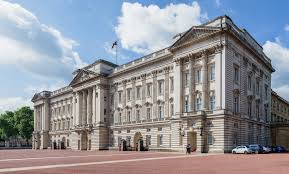
The Crown is the British government, and Britain, and the Queen, all at the same time.
Everyone in England is a tenant of The Crown. This is because our land laws are loosely based on a combination of Anglo-Saxon and Norman feudal laws. (Once the monarch dispensed land to his barons, who owed the monarch obligations in return. The barons divided this land amongst their knights, who owed the barons obligations in return. The knights divided this land amongst their squires who owed the knights obligations in return. The squires divided this land amongst their tenants, who owed the squires obligations in return. These obligations took the form of tithes (a share of the crops), cash rents, and/or military service.)
The two types of tenure that exist in the UK are freehold, and leasehold. Freeholders own exclusive rights to use their land for set periods (often 999 years, renewed whenever the land is sold); leaseholders have limited rights to use their land for shorter periods, and often have to pay service charges or land rent to the freeholder. When we talk about landowners, or homeowners, we’re actually talking about people who are tenants. Their tenancy is long, and generally they can do what they like with their property, so to all intents and purposes they own it. But nevertheless, the British state, that is The Crown, sees them as tenants (and probably has the same attitude toward them that your landlord has towards you).
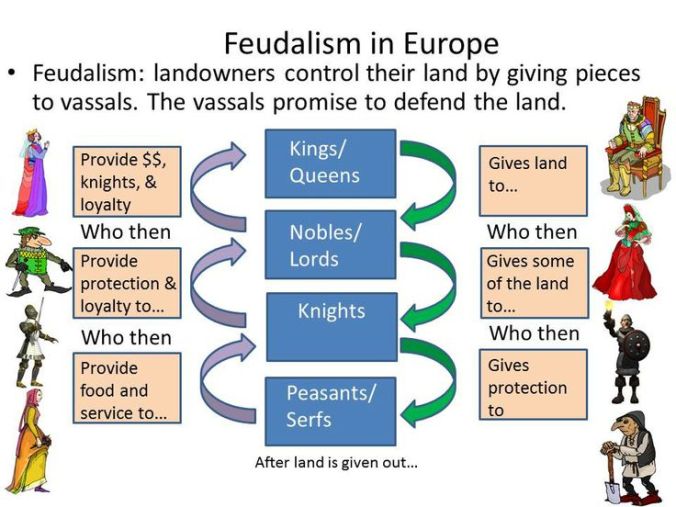
this is the basis of our current land ownership and laws in the uk.
So now we understand that The Crown owns England, and everyone else is a tenant of The Crown, we need to look at landholding (landholding refers to the people who own or manage land or property) more clearly. From now on, when I talk of ownership, I mean the freeholder of any piece of land. In almost all cases, the freeholder is the effective owner of land and they reap all the benefits of ownership. We could also use the word ‘control’ to describe their relationship to the land.
About 32% of Great Britain is owned by the Crown Estate (on behalf of the Queen and Royal Family), the aristocracy, the titled nobles such as Barons, Lords, and Duchesses), mostly land granted to them by various monarchs from 1066 onwards. That’s a third of the country, still in the hands of the ancestors of the original thieves. There used to be land in the UK that was known as common land, and all were entitled to use this land. This common land allowed landless British people to survive by being able to graze animals and maintain themselves. However,between 1604 and 1914 laws were made to gift this land to the aristocracy and other wealthy citizens, and made huge numbers of the rural poor unable to feed themselves.
At much the same time many of the ruling classes had urban factories that they needed labourers to work in. Some historians have suggested that these two facts were connected, whilst others claim that the two were completely unrelated and a matter of coincidence.
Once there were millions of acres of open fields and common land, now those commons exist only as fragments and no-one can use them to support themselves. The ancestors of those who took the land often still own it, whilst the descendents of the rural poor are generally still poor themselves. The land and wealth are as linked now as they have ever been.
Land in the UK comes under three categories: Agricultural (farms etc); Urban (homes and shops and factories – including cities, towns, and villages); and “natural waste” (mountains and other land unsuitable for farming). There are 42 million acres (an acre is about the size of half a football pitch) of agricultural land. There are 12 million acres of natural waste. There are 6 million acres of of urban land (of which about 3 million acres are actual homes).. As you can see, urban land takes up very little space in the UK.
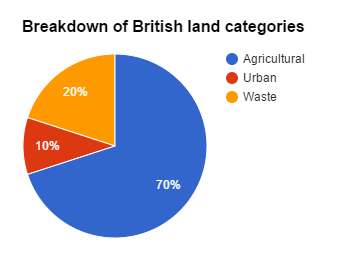
Britain isn’t over-built. We just need laws that favour the best use of land.
If you are the owner of any of that 42 million acres of agricultural land you qualify for a handout from the taxpayer, whether or not you grow crops, raise animals, or leave it alone. This amounts to £5 billion pounds a year (in 2010). This goes to the landowner. It is called the Single Farm Payment, sometimes described as a subsidy to protect farmers from cheap foreign imports (which is doesn’t do very well), but in reality it is a reward for owning land, paid for by the rest of us through our taxes. It is unconditional, which means that it doesn’t matter how rich you are already or what you are doing with your land, you still receive it. Compare this to means-testing of benefits. In fact, the more land you own, the more money you are given. As a point of comparison, in 2014 the government spent £3 billion pounds on unemployment benefits. How can it be right that more of our tax money is spent on rewarding landowners than preventing the unlucky from starving? I thought Britain was supposed to be broke.
As we see, Britain spends a huge amount of money of rewarding wealthy landowners. Many of these are people who bought that land as an investment, because of this income and from the increase in land values over time. We don’t know exactly how much each person gets, because the government won’t tell us. But we do know that the average is about £20,000 each. Not bad, eh? In Scotland we know that the single biggest payment in 2009 was £1.2 million. The smallest landowners receive very little – that’s 65,000 people who have farms of 2 acres or less. They don’t get much. But the biggest get a lot. So how does that affect the price of houses?
This creates a system where land is valuable for reasons other than its use. Without this reward, landowners would have to decide on the most economical use of their land. With it, the land becomes more valuable than its actual worth. It becomes a good investment to own this land rather than build on it. We are, in fact, paying the wealthy not to build on their land at a time when housing is desperately needed.
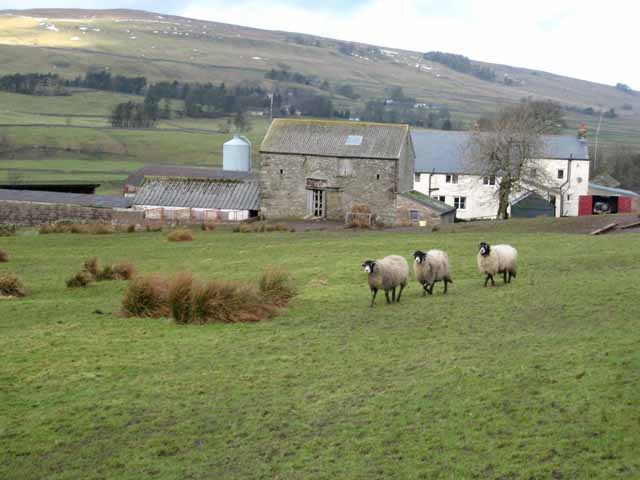
this farm might earn more money from the Single Farm Payment and subsidies than it does from farming
One tiny ray of light – because this payment is arranged by the EU through something called the Common Agricultural Policy, it may be that after Brexit this payment no longer takes place. If we are lucky it can be replaced with something sensible that protects the smaller farmers without rewarding land ownership and distorting land prices across the country. The current Conservative government however has claimed that they might increase it after Brexit. We can only hope that this does not happen.
It gets worse though. Despite the best efforts of the Land Registry, roughly half of British agricultural land is either unregistered, or is registered to offshore companies. This makes it almost impossible to know who really owns the land, or what they are doing with it, or intend to do with it. This in turn makes it very difficult to plan towns and estates. It allows landowners to effectively volunteer their land in exchange only for huge amounts of money. By only releasing land in small plots for high prices, Britain’s landowners massively inflate the price of housebuilding.
It gets worse though. To understand how this is, we need to go back to two previous Prime Ministers – Margaret Thatcher and Tony Blair, and even earlier than that, to 1950s Tory Minister of Housing and aristocrat Edwin Duncan Sandys.
To be continued…
 why are we poor?