Why are we poor? Why doesn’t work pay?
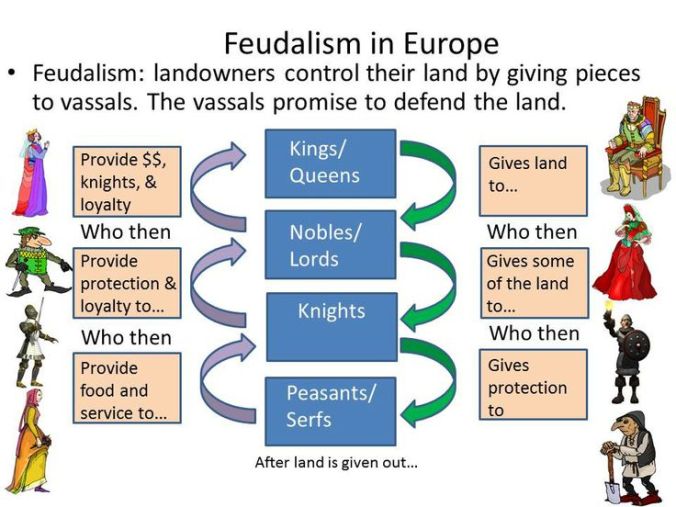
Working for a living is a fairly modern condition. Historically, from ancient times until the Enclosure Acts in the 1800s, we have worked for our local lord, giving the largest share of the crop or a period of labour or soldiering in exchange for using some common land to support ourselves. Earlier than that, people worked on a patch of land, grew whatever they could, and bartered any excess with their neighbours. And even earlier than that we were hunter-gatherers and only ate what we could find or catch.
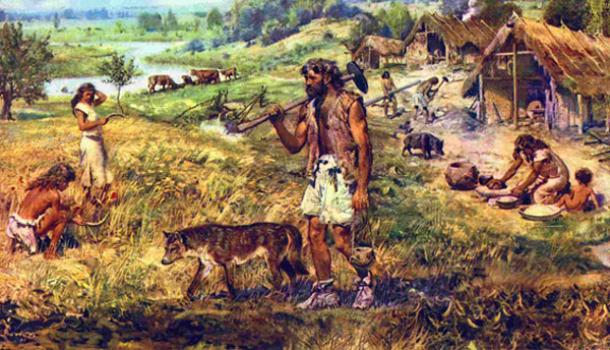
Neolithic man – early farmers
Firstly I will explain quickly at how and why these conditions changed, and then I will explain why this is important to us today.
First of all, the change from hunter-gathering to farming meant some major social changes for ancient humanity. Farming allowed people to stay in one place and create fixed communities. This meant that individuals had to specialise. One person could grow wheat, another beans, another could raise cows for meat and milk. Farming allowed humans to create an excess that could be stored or bartered. Having an excess of food allowed us free time away from farming to develop skills such as tanning, crafts, and metalwork. These skills allowed individuals to create, and exchange their skills or creations for food or other people’s creations. These skills often allowed humans to make more food, more efficiently, and build up a greater excess and therefore have more free time for practising their own skills. But some of the creations were weapons. Even the finest stone weapons are no match for the worked-metal weapons of the Bronze age.

bronze-age weaponry was better than stone-age weaponry.
Weapons allowed some communities to dominate other communities and demand tribute. Weapons allowed a warrior class to exist. This warrior class did little or no work themselves. They claimed leadership rights and the ability to impose their own rules or laws over the places they dominated. They quickly learned to legitimise their rule by claiming that God (or the Gods) gave them the right to rule, to make it not only illegal but also a sin to dispute their rule. And from there on, in Britain at least, not much has changed. Our monarch still rules by the gift of God, our soldiers swear allegiance to the Queen rather than to the people, and much of the country is still owned by people whose land was given to them by previous monarchs, monarchs whose right to rule was based on having a bigger army and more soldiers than anyone else. The myth is that our laws, our government, our society, is modern and progressive, but all those things are based around one bunch of blokes being tougher than another bunch and getting to tell everyone else what to do.
Dominating lands gave you the ability to claim a tithe (in terms of crops, labour, or taxation) on that land (as mentioned earlier), or just take everything and pay your workers what you believed their labour was worth. At many points in history, this worth has been very low, sometimes far below that which is necessary to keep people healthy – literally starvation wages. Changes in conditions that favour the workers have been rare. In the 1300s, after the “Black Death” had killed two-thirds of the English population, peasants were able to sell their labour for much more money due to the lack of healthy workers available. The rulers of England weren’t having this, and passed a law, the Statute of Labourers which limited the amount of money people could demand, and making it illegal to move around to get a better deal. As a result of the labour shortage, very little bread was available, making bread more expensive, and so people were forced to work, facing imprisonment if they didn’t, but they couldn’t afford to feed themselves on their wages. This was one of the factors that led to the Peasant’s Revolt of 1381

The Peasants’ Revolt of 1381. Not pictured: London on fire.
As the amount of human beings increased, and technology got better, the amount of surplus production increased, and the amount of wealth that could be claimed from the land increased. There developed a group of people who managed trade on behalf of the landowners. They did not own the land or provide the money, but they were paid to ensure that the maximum amount of wealth was generated for the landowners. These people became increasingly wealthy themselves, many of them came to be landowners and business owners in their own right. This group of people became known as the bourgeoisie in France, though they are generally known as the middle classes in the UK. However, as they were not kings and aristocrats, they had no say in governing the country. Many of them felt that they should have a say or objected to the king spending their tax-money on his own luxury, or on wars that damaged trade. European countries were always at war with each other. This led to a series of revolutions across Europe from the 1600s to the 1900s as the middle classes struggled against the kings for power. In almost every case, authoritarian rule by the king and the aristocracy was replaced by some form of parliament, with the middle and upper classes electing members of parliament. In many places the kings survived in some form or other. In Britain, eventually the two factions settled on a parliamentary monarchy, whereby the aristocracy are allowed to keep most of their privilege in exchange for letting the middle classes run the country and have a share of the wealth. For how parliament used the law to formally take land from poor people’s use and give it to the wealthy, see my earlier essay. The monarch has to give their permission to all the laws made by parliament. It is generally considered that if she did not, then parliament would abolish the monarchy. So that this doesn’t happen, and the monarch and the prime minister have weekly meetings to ensure that parliament isn’t doing anything the monarch might object to. This is called liberal democracy.
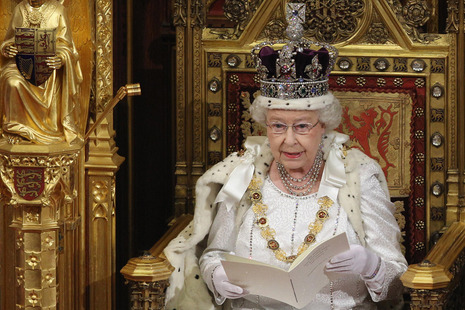
The Queen demonstrating the British state’s commitment to democracy and equality of opportunity.
During the Labour government under Blair, the hereditary powers of the aristocracy were further eroded, as the House of Lords was reformed. By removing the right of most aristocrats to sit in the Lords, we replaced an unelected second chamber of the upper classes with an unelected chamber of government appointees. This is supposed to be fairer, but is just another undemocratic gravy train, this time favouring the political middle classes. It is used to bribe MPs and civil servants, business owners and charity workers, awarding them a healthy living and the illusion of being able to change things in exchange for them playing along with the government of the day. Incidentally, there are lots more Lords than there are elected MPs. The greater part of Britain’s politicians are not elected. Democratic choice is only a minor part of our system..
This process, by which the middle classes mostly gained the ability to control their own wealth, set their own taxes, and dictate the terms of employment, prepared the ground for the modern capitalist state.
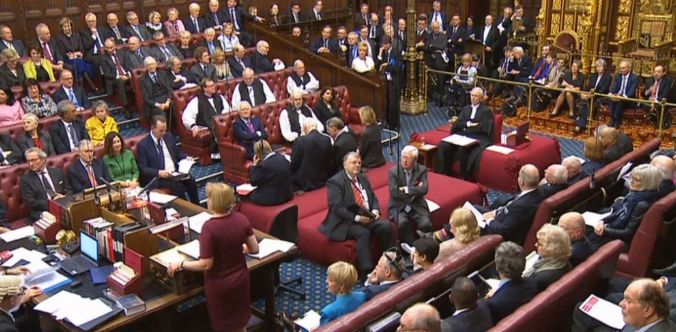
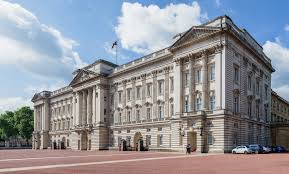
Lots of democracy and accountability going on here, at a vast cost to the taxpayer.
This historical stuff is important because it allows us to see the set of conditions under which Britain is governed; Britain’s laws and economics and traditions have arisen through conflict between the upper and middle classes. It is these two groups who have collaborated and squabbled to create a system which works for both of them without leading to direct conflict between them. Laws are only made that benefit them. Any changes that benefit us are made only as compromise when threatened, or to buy us off. No improvements have ever been made to our conditions that have not been fought for, and often died for, by working class people long before anyone took up our case in parliament.
All of which leads us to the main points about working for a living:
- Because we own neither money nor land nor factories we must sell our physical or intellectual labour in order to survive.
- Employment exists because the employing class took from everyone else the ability to provide for themselves and their ancestors refuse to give it back or share. The entire system is and always has been about their needs, their laws, and their property “rights”.
The relationship between employer and employee is almost always based on exploitation. Even some very well paid people are only paid a fraction of what they are worth. The difference between the amount you are paid and the amount of money you generate for the business is called “surplus value”. Only at the very top is this relationship not always exploitative. Directors and other members of the executive classes are often paid many times their surplus value, because the people who set their pay have class loyalty and they expect to be paid this way themselves. We regularly see Chief Executives and Directors given performance bonuses despite running the business into the ground. We get laid off for their failures, they get performance bonuses and “golden umbrellas”, then get another job somewhere else and do it all again. This is class consciousness at work amongst the upper middle classes.
Sometimes the relationship between employer and employee can be pretty good – you might find that the employer pays well for your work, provides you with rights over and above the legal minimum, and pride themselves on being “a good employer”. You may get on well with your manager, or the company owner. But those things don’t change the economic facts. But even when you and your boss get on well, and your pay and conditions are good, the relationship is still exploitation. You are still generating profits for someone else, rather than receiving an equal share. Once you stop generating profits, you will be let go. You have no ownership over your work, your only incentive to work is either the need to look after your family, or sheer greed. And you might ask yourself, if I don’t get paid enough to look after my family, and I’m not greedy, then why should I work? You wouldn’t be the first to ask that.

These workers are making an informed and free decision to work rather than starve.
Capitalism is both an economic system and an ideology. As an economic system it means that private individuals rather than the state provide services and own everything. Many pro-capitalists claim that capitalism is not an ideology, and that capitalism is merely a description of a set of economic conditions. This is a dishonest claim, and is only made to deflect from criticism (both fair and unfair) of capitalism. They want us to believe that capitalism is a neutral position, rather than one in which there are lots of values, both implied and stated. There are a number of strands of ideology within capitalism, all of which compete with each other for political control. All capitalists agree that the pursuit of profit is the main and best incentive for human achievement, and that is is desirable that this should be the basis of a political system. They believe that this brings out the best in human beings, and conforms to human nature. All of them seek to increase profits year-on-year, or quarter-on-quarter. This pursuit of growth rules our society and dictates all policy from there.

The global fantasy… being able to extract infinite profits from finite resources.
Once examined, this seems both impractical and impossible. If, for example, you make profit of one million pounds in the first year, then profits of only three-quarters of a million pounds the second year, then you are failing to deliver growth and your prospects for economic success are low. Growth can be created in a number of ways. Through increased sales; through technological improvements making it cheaper to create your product; through developing new products or finding new people to sell your product to; by finding cheaper suppliers; by reducing your margins (using less ingredients / parts but charging the same price); by reducing labour costs in various ways. All companies use every one of these methods, all at once and constantly. So why is it impractical and impossible?
The answer to this question is huge and complex. I will not be able to cover everything. But we can give it a good try!
It is impractical because it reduces every idea and interaction into units of profit regardless of the success or failure of the product, environmental or human cost. It creates both artificial scarcity and artificial glut depending on whether it suits the owners better to flood the market or starve it. It encourages dishonesty and unpleasant behaviour. We measure human success only by money generated and not by anything meaningful. Development is based on profits, not social usefulness. Money is all that counts. Surely you are worth more than the profit you can generate for your boss? Capitalists claim that the “invisible hand of the market” resolves all issues. For example, human beings are fishing the oceans clean of fish. Bluefin Tuna is almost extinct. Capitalist theory supposes that if we want tuna in the sea, we should be paying people more money to not fish tuna than they earn by fishing tuna. The argument goes that we clearly don’t care about the oceans or we’d pay for it. As if we can afford it! (It is worth pointing out that attempts have been made to pay people not to fish, using state wealth to fund the payments. Free-market capitalists have generally done their best to stop this from happening through a variety of political and legal methods. The payments should be made by individuals, according to them, not from taxation). The “invisible hand of the market” assumes that all possible options are both affordable and available. Capitalism, through advertising and marketing, creates the illusion of choice, whilst decreasing the amount of real and meaningful choices you have. Capitalism without state intervention to direct it creates stagnant economies, massive wealth inequality, and reduces all value judgements to “will it make a profit”. This is where we are now – massively in debt (both as individuals and as a country), with everything owned by a few corporations who rely mostly on cutting labour costs in order to continue growth.

Of the many ways to create growth, the only one that is guaranteed to work is cutting your labour costs. If you haven’t developed successful new products, found new markets, gotten cheaper parts, etc., then you need to get your workforce to do more for less. You can’t make people buy your products, but what you can control is how much you pay in wages. So below inflation pay rises, or no pay rises at all increases profit for the employer. Getting staff to be self-employed and pretending it’s their choice increases profit. Moving your factory to China certainly increases profits. When all else fails, the workers get screwed, not the shareholders. That’s growth!

It’s cheaper to make these toys and ship them to England, than it is to make them in England.
The pursuit of growth is absurd because it doesn’t reflect reality. Growth is alright, but it isn’t everything.. If my business costs 1 million pounds a year to run, then really i only need to make 1 million and 1 pounds a year. Anything above that is all good. Profits being down isn’t a tragedy, it’s just a bad quarter. You can run your business for years without having significant growth but also without losing money. So why do capitalists pursue growth above all other things? It’s nonsense. It’s just greed.
Profits are greater now than at any time in human history, but they are not growing – the richest people in the country own a bigger share and pay less tax than at any time in modern history. But at the same time, we are living under austerity? How can we be fabulously wealthy and also broke? It is impossible because we are a finite world, and we only have so much to go round. We are seeing capitalism unable to generate new markets any more, and because the rich don’t pay much tax, countries are poorer, which means that their people are poorer and unable to buy as much stuff. So now profit is coming from wealth generated through transferring tax money to the private sector through privatisation, and through cutting wages, and expecting people to do more work, and avoiding taxes. Wages are falling in Britain, but profits are growing because of this. People are not spending more, instead they are earning less. The economy is increasingly reliant on lowering wages to maintain (meagre) growth.
There are many different forms of wage lowering used by employers, with varying degrees of legality. Many businesses transfer their skilled jobs overseas, to countries where wages are lower or labour laws not so strict. Some countries encourage this by creating Economic Zones where business taxes are low or non-existent. Many countries have little or no regulation of work, meaning that they can use actual slavery. How can we compete with that? The results of this “globalisation” is that there is less skilled work available and thus skilled workers are forced to compete with each other to see who will accept the lowest wage, and the worst conditions. This is happening with qualified work as well, and increasingly the university educated worker is discovering that they are unable to find well-paid work that is relevant to their degree..
In a similar process, where work in the UK cannot be moved to where labour is cheaper, competition needs to be created here. This is where immigration comes in. You might have asked yourself why the EU keeps getting bigger, taking in more and more countries, whose people then can move freely to the UK (and the other wealthier countries of the EU) and work? Each extension of the EU opens the job-market to progressively poorer countries, using their workers to provide competition to existing labour, and opening their resources to easy exploitation by EU-based corporations. The mainstream media, both pro- and anti-European, like to give the impression that we allow all these people to come here because we’re nice. Immigration, the message goes, makes us all better people, is a kindness to those who want to come here to work, and all of that. But in reality immigration is used to push down wages at the low end. During the EU referendum debate you might have seen denials that immigration pushes down wages, stats showing that immigration increases GDP and so on. But immigration doesn’t push down wages for the middle and upper classes – for them immigration is an opportunity to work in different places, or to find skilled foreigners to fill managerial and professional roles. But immigration pushes down wages for those of us at the lower end of the pay scale. Who is going to pay us a living wage to pick vegetables when you can pay an agency to ship in transient workers on below minimum wages? And this is happening all across the UK. We’re being told it’s not, but our own lived experience tells us otherwise. Much of the low paid, or seasonal work, is now being done by immigrants from countries where there is no welfare and little work. In London, where cleaners used to be working class mothers, students and grandmothers earning a bit more money, they’re now African or South American and struggling to survive on their wages. In Lincolnshire, where food pickers used to be local, they’re now Eastern Europeans living in barns and bunkhouses, paying rent out of their wages, plus a cut to agent that found them the work. When such jobs are available, the pay is so low you can’t afford your family’s food and rent, so you can’t take the job, and then voices in the media call British workers lazy and talk about cutting benefits unless you work.
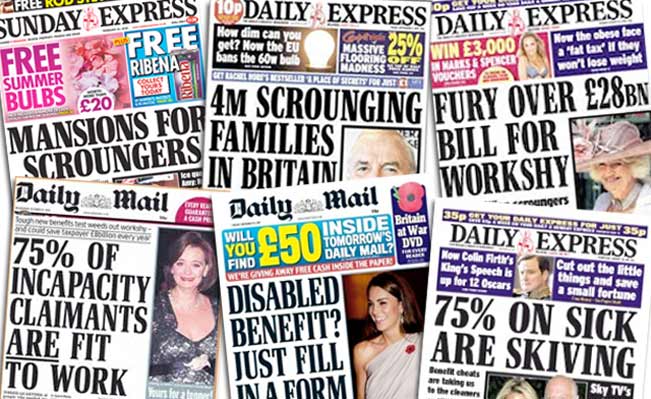
What a lot of nonsense.
Some people blame migrant workers for this, which is putting the cart before the horse. The blame has to lie with the person who exploits, not the exploited themselves. Blaming the victims for the conditions imposed upon them is always wrong. People who want you to blame the immigrants rather than the employer or the system are trying to distract you from the real problems in society.
The next way that capitalists create profit from wages is unpaid labour. This takes many forms. Firstly, there are programmes for the unemployed that provide businesses with thousands of hours of unpaid labour every week, every hour of that labour saves them money and increases their profits. Every hour of that labour is work taken away from someone who needs it. This labour doesn’t replace work for middle and upper class people of course. And you need to do it in exchange for your benefits. So in the end you’re doing the same job you did before, but for no money! When they replace a paid job with an unpaid job, that’s a person on benefits and not paying tax. Unpaid labour takes from the state and the taxpayer, and gives to the corporation and shareholder. Likewise, when a job pays so little that the worker needs top up benefits, the taxpayer is subsidising the employer’s profits. If the employer needs state benefits to top up their employee’s wages, it’s a failing business by any meaningful analysis. If it’s a profitable business that can afford to pay better but doesn’t as that would eat into profits, then that business is stealing from us taxpayers.

Work for free ensures that only the wealthy get work experience.
Other ways in which capitalists create profit from unpaid labour is in prisons, where prisoners work for pennies an hour, redeemable against inflated prices in the prison shop. There are punishments for prisoners who won’t work. Many prisons are privately run, their owners incentivised to cut costs and conditions and create dangerous environments for both prisoners and guards. Remember that capitalists profit from prisoners. Politicians and judges are also business owners, board members, and shareholders that profit from every working class man or woman sent to prison, whilst the wealthy hire expensive lawyers to keep them out of prison at all costs. Justice is not blind. A working class person is more likely to be arrested, charged, and convicted. Middle and upper class people, if convicted, receive lower jail sentences than their working class peers. Meanwhile those who won’t turn to crime have to compete with prison labour to see who can provide the cheapest workers. Whether you’re a criminal or not the prison system harms you.

Prison labour is little better than slave labour, and takes jobs from working class people.
.
In terms of employment, there’s only really one thing you can do to improve our conditions. Where we have work, we can join unions. Unions are mostly toothless these days, and many of them are run by the same class of people who run the businesses. I know of more cases than I can count where unions have failed workers, either as individuals or as a class. However, they are (only just) better than nothing, and it remains illegal to sack a worker for joining a union, for union activities, or for agitating for better pay and conditions. Sometimes even fighting and losing is better than accepting things as they are.
Not all workers are employed, of course. At any given time there is a group of unemployed workers looking for a job. Where workers are scarce, wages go up. Where workers are easy to find, wages go down. This is another reason why Britain is always importing workers from abroad (not to mention that this saves the British state money, as another country has paid to educate and train those workers). The zero-hours phenomenon has been fantastic for both employers and the state, as it means that a worker can simultaneously be unemployed and working! But zero-hours workers find that they are poorer than ever and competing with their class-peers for the tiniest scraps of work.
As we can see, the end result is always the same. We are poor because our ancestors weren’t rich. We are poor because their system is failing us. We work harder and receive a decreasing share, whilst profits soar. This cannot continue. We are poor because work does not pay enough to live on, because our labour is not remunerated fairly, and we are poor because our poverty is necessary for their wealth.
Further Reading:
On the Enclosures Act: http://www.thelandmagazine.org.uk/articles/short-history-enclosure-britain
On early humanity:
http://www.essential-humanities.net/history-overview/stone-bronze-iron-ages/
On the Peasants Revolt of 1381:
http://www.bbc.co.uk/bitesize/ks3/history/middle_ages/peasants_revolt/revision/1/
On the French Revolution as a bourgeois revolution
On the English Civil War
https://en.wikipedia.org/wiki/English_Civil_War
On how British parliament works.
https://en.wikipedia.org/wiki/Constitution_of_the_United_Kingdom
On the ideologies of capitalism and growth
http://www.globaljustice.org.uk/myth-4-all-you-need-growth
On profits
Google search “record breaking profits”!
On the effects of unpaid work
https://www.oecd.org/dev/development-gender/Unpaid_care_work.pdf
On the gap between profits and wages
https://www.ft.com/content/83e7e87e-fe64-11e6-96f8-3700c5664d30
On immigration and wages
On how prison labour destroys jobs and wages for working class people
http://anotherangryvoice.blogspot.co.uk/2016/08/the-uk-prison-labour-industry.html
On the use of self-employment to save employers money and steal from workers and the taxman
 why are we poor?