Education and poverty

Maybe we’re poor because we’re uneducated.  Perhaps we left school without any qualifications, or maybe our qualifications aren’t as good as other people’s.  Education is all equal, isn’t it?  


Some people are educated for power and some people are educated for drudgery.  Wealthy parents send their children to private schools, where they mingle with the children of MPs, ministers, executives, and judges.  At these schools even the dimmest of students receives a personally structured education geared towards Oxford, Cambridge, or one of the other elite universities.  They are given all the personal tuition needed to pass their exams.  There have been allegations that often their coursework and exams are amended by the schools to ensure good marks.  Their teachers are also Oxbridge alumni, their headteachers as well.  Personal recommendations from close friends smooth the way.  For students who aren’t very academic, the best universities have courses that are easier to get on, PPE, for example (Politics, Philosophy, and Economics) is considered easier to get on to than most courses, and the amount of work necessary during the course is much lower than more academically rigid courses.  Similarly History of Art is another course tailored toward ensuring that even the least academic child of the aristocracy can get a degree.  The degree is used, in these cases, to show that this person must be academically gifted and therefore suitable for office, when in fact their only real qualification is wealth.  This is not to say that all degrees are worthless, just that some degrees are not really an indicator of brains.  The qualification is the excuse for giving these people jobs, but the reason why the plum jobs go to the children of the upper classes is pure nepotism.


Working class children have always been poorly educated.  Our education has always been second-best.  The Conservatives generally prefer a two-tier system of education – grammar schools for the smartest kids and secondary moderns or comprehensives for the rest of us.  This always seemed to end up with the middle-class children at grammar school, along with a handful of the smartest plebs, and the working class kids at the comp, to learn practical skills.  This obviously was massively offensive to those working class parents who wanted their children to be able to work in an office, or aspire to better than they themselves had.  But the varying needs of capitalism require many different types of worker, and all need to be provided by an education system.  Each of them requires, to use an army expression, “just enough education to perform”.  Over-educated workers get bored, move jobs more often, steal, slack off, and generally under-perform.  This is bad for business!  Under-educated workers make mistakes and cost money.  So politicians are constantly being hassled by business leaders about changing education standards to meet their needs, whilst voters want their children to have a good education in a safe environment.  So education policy is constantly being meddled with, and children suffer.  Politicians almost universally pay to have their children educated so that they don’t need to worry about it.   They won’t meddle in their children’s education!  Not that it matters, as nepotism will see them through, no matter how dim the child.


Recently the educational trend has been towards academies.  These allow businesses to make money from education, and to run schools as their own fiefdoms.  Discipline is stern, allowing no leeway for vulnerable children from stressful backgrounds.  Education is tailored towards whatever ideological pigeonhole the owner desires – commonly religion, or perhaps worse – the idea that future workers should have some maths and be able to read and write and be used to sitting for hours in silence, doing whatever they’re told, whenever they are told it. We know that academies are bad for us, because when the Conservatives decided that all British schools should become academies, the Tory heartlands revolted.  Academies were not for their children, only ours.  The plan was shelved and once again only working class children can be monetised by carpet millionaires and religious fundamentalists..  


A short history of education in the UK.

Like every area of political life in the UK, education is and has been a battleground between various capitalist ideologies.  Since medieval times, the upper classes paid to send their (male) children to school, to schools run by churches, or to “public schools” – that is, schools that are open to anyone who paid the fees and not restricted to those who followed a particular religion.  

Working class people learned trades through a system of guilds and apprenticeships.  Women of any class were rarely educated in schools, though many middle and upper class women were given some education at home.


Historically, schooling the children of the working classes was done to protect the upper classes.  Unemployed children found themselves having to steal or starve.  They stole from the wealthy, and they stole from the merchants.  In the absence of effective social control methods, a Christian education was the next best thing.  At best, working class children were given a bit of maths and english to help them before they were Apprenticed off, and a spot of food to stop them starving or stealing.  At the worst, they were impressed with the knowledge that stealing was a sin and that if you starved to death at least you didn’t go to hell for eternity, and then they were left to get on with it.  This was the mid 1800s.  Church and Ragged schools proved a success, and laws were passed that dictated that all children should be educated between the ages of 5 and 10.  


Many children were not educated because they were working.  Employers of children under 10 were required to show that their employees had attained the necessary standard of education, but this was uncommon.  Poor families needed the income, and unscrupulous employers needed low-paid child workers.  


Working class activists were able to influence education, in these early days, by sitting on school boards and thus influencing what was taught.  This was unacceptable to the Conservative party, who desired direct control over education, and thus a bill was passed that provided financial support for all schools, and gave educational control back to the British government in 1902.


In 1918 secondary education was made compulsory until 14, and secondary schools were also made subject to state control.  Publically-funded education had seen to be successful, in that it both served the purposes of the wealthy and increased peace and prosperity in the country.  In 1944 the Butler Act was passed, and “the tripartite system” began.  


The tripartite system


Tripartite means ‘three parts’.  This system splits all children into one of three types, using an examination at age 11, based on an exam called the 11+.


Type1: the grammar school student.  Children who did well at their 11+ went to grammar school, where they studied academic subjects and were prepared for university, civil service, and and other important leadership roles.  These children were generally the children of the middle and upper classes.  This is because their schools taught them a syllabus that made it more likely the kids would pass this test, and because they could afford speciality tuition for their children.   These children were then considered naturally gifted and appropriate leadership for the next generation.  The children whose parents couldn’t afford to get them tuition, or who didn’t care about their children passing the 11+, or didn’t know that it was a fix and believed that it was all about natural intelligence and a level playing field, those children were considered ungifted and suitable for types 2 and 3.  The 11+ did not have a pass / fail threshold.  The results were sent off to the grammar schools who made offers to whichever children they wanted.  Whilst this system did increase social mobility, by allowing access to the professional classes by the very brightest and best of working class children, it did so because those people who ran the businesses and industries of Britain needed more clever people than the upper and middle classes could provide.  Most working class kids were not given the means to pass the exams, and that was the way it was intended.  Even if a working class school provided the best possible education to the children, they were all fighting each other for a few golden tickets, and most of them wouldn’t make it even though less talented upper and middle class children were likely to get through.  Cherry picking the very best and letting everyone else go isn’t true equality of opportunity or outcome, it’s a cruel imitation.


Type 2: the secondary technical student.  These were the scientists and engineers.  Clever children, but not the elite.  For most working class children secondary technicals offered a good skillset for secure employment.  However, these schools never really took off.  The state wasn’t committed to the idea of spending the money to achieve uncertain aims, and so secondary technicals didn’t get going.  This was because generally Unions were able to provide training for students in whatever skills were needed, and because capitalistic governments are generally reactive, no-one could make proper plans for what skills were needed.  It is always cheaper and easier to import trained workers rather than wait around for a decade whilst children are educated in the skills needed today.


Type 3: the secondary modern student.  That is all the rest of us.  Basic education, warehousing of kids.  At first secondary moderns didn’t even offer all students a chance to do exams.  If you lived in the wrong place and you didn’t get into a grammar school, you might not even be allowed to take exams, no matter how smart you were or how hard you work.  Imagine being consigned to failure before you even hit 11.  That was how it was.


In 1965 the Labour government started the process of abolishing the grammar school system, but this process was never completed.


The comprehensive system


The idea was that the old tripartite system went, and a new system of comprehensive schools would replace it, where all students received the same quality of education as they would have done at grammar schools.  In practice this didn’t happen, not least because many local authorities kept grammar schools, and because education for working class children has always been underfunded.


Despite everything, comprehensive education was mostly ok.  Teaching standards were high, and exam results were pretty good considering how hard the exams were.  During the 80s however, the Tories realised two things.  1.  There were lots of left-wing teachers teaching children left-wing values.  2. Working class and poorer middle class Tory voters didn’t feel like their children were being prioritised over less deserving children.  This needed to change. A prolonged period of meddling with the education system was about to begin.  


The National Curriculum


The National Curriculum was the response to the first realisation.  The National Curriculum would prevent teachers from teaching anything other than the proscribed version of events.  Of course, this didn’t apply to private (aka public or independent) schools.  They can teach what they like.  The Tories understood the Gramscian idea of hegemony, and realised the power of working class teachers teaching working class children.  This had to stop.  The Gramscian idea of hegemony is that the prevailing ideas and prejudices of a society get in the way of people’s abilities to criticise a society.  If a person grows up believing that Britain is fantastic and fair and egalitarian, they are less likely to believe anything that opposes this idea.  And, of course, vice versa.  Left-wing teaching made children more able to accept that society might have to change, which is the exact opposite of what Conservatism is about.


The National Curriculum was also an important part of creating a marketplace for education.  Margaret Thatcher was a keen advocate of the capitalist economic policies that were known in the UK as Thatcherism, and which was part of a global movement known these days as neoliberalism.  Competition is important to neoliberals.  It was important that schools competed with each other for the best pupils, and that schools that were not popular would have to improve or close and be replaced with a new school.  It was important that these ideas became embedded so that private companies could be introduced into education.  Simply giving a school to a carpet millionaire to run wouldn’t have gone down well in the late 80s, people needed to get used to the idea of education as a marketplace, with failing schools being replaced by new aspirant schools, closing and reopening again with the same facilities but a new brand like a chicken shop changing from Mississippi Fried Chicken to Alabama Fried Chicken overnight.


Grant-maintained schools

Comprehensive schools were funded by the Local Education Authorities, and were subject to LEA rules and scrutiny.  Many Conservatives in Labour-run LEAs felt that this was unreasonable, because it forced their children to go to non-selective schools, schools subject to the National Curriculum, or non-religious schools.  In order to ensure that sensible conservative voters in Labour boroughs could ensure their children got access to an elitist education, the policy of Grant-maintained schools was introduced.  The school could opt out of LEA control, and become owned and managed by the governors.  The rewards were that the school got more money, could set its own curriculum, and set its own rules and regulations, and entry requirements.  Essentially, schools were punished for not becoming grant-maintained, and control of education was handed over to a self-selecting group of wealthy and well-educated parents, to religious extremists, and other assorted lunatics.  


A brief aside into Further Education: Polytechnics, Universities, Student Loans, and debt bondage

At the beginning of the 80s class stratifications in education were clear.  The upper classes went to private schools and then to Oxbridge, the middle classes went to good comprehensives and then on to lesser universities, and the working classes, if they wanted to study, did something practical at a polytechnic.  A Levels were really only for people who wanted to do a humanities subject at university, and very few children from working class families ever did.  The best middle class students ended up at Oxbridge, of course, but not many working class children.  However, during the 80s, the populist Conservative spiel about opportunities and aspiration (and the movement abroad of traditional working class jobs) led to an increase in working class children going to university.  This created a number of problems for the Conservatives, and a number of opportunities too.

Problem number one: Student Grants.  Once upon a time, the government paid a grant to all students to cover the basic costs of living whilst they studied.  This was alright (thought the Conservatives) when it was just their children getting it, but upon finding their taxes supporting hordes of working class children the Tories discovered that it was a terrible idea.

Problem number two: Lots of students with degrees needed to find work, competing with the children of the upper and middle classes for professional level work.

Problem number three: Students were well known for being able to devote themselves to political actions.  Many Labour MPs and a few Tory ones had spent their degrees organising and agitating against the government instead of studying.  This was considered unacceptable to Thatcher’s authoritarian governments, who wouldn’t want an increase in student numbers to correlate with an increase in activism.

Problem number four: how to monetise students rather than have them cost the state money (see also, Problem number one).


Solution number one: Firstly, let’s open up university education to the working classes, without affecting the universities that the middle and upper classes go to.  Thus polytechnics, the science, technology, and engineering educations centres, became universities and able to award degrees in whatever they liked without central oversight.  Within a few years there were hundreds of thousands of university places available, offering degrees in every topic under the sun.  It was often very easy to get in, I know of many students who were offered places on degree courses with awful A Level results – two Es, a single E, or no A Levels at all.  With all these degrees out there, slowly but surely entry level requirements for work changed.  So with all these qualified university-leavers out there, how does an employer know the difference between them?  By the establishment, same as it ever was.  One degree is not the equal of another.  Degrees from Oxbridge and the so-called Russell Group of ‘proper’ Universities require a lot more work in exchange for a degree certificate.  In terms of amount of work handed in, a former polytechnic degree taken in the late 90s contained about the same amount of work as a single year of an equivalent Oxford degree.  And cost the same as an Oxbridge degree.  The plebs were now able to get their degrees, the employer could tell by the university whether the degree was any good or not, and things were back to normal.

Solution number two: Secondly, let’s stop paying grants, and instead make loans to students.  That way they’ll need to work part-time, providing a body of cheap labour for employers and competition for wages at the lower level.  The loans will generate profit for private industry (once the Student Loans Company was sold), and we can keep increasing the price of education until we’ve discovered the maximum working and lower middle class students will pay for an education.  Incidentally, because the interest on the Student Loans was low, wealthier students who didn’t need to take out loans in order to live would take out the loans anyway, invest them in a high interest account, and make a decent profit.  This leads us to…

Solution number three: Under the old system, lots of students spent their ‘free’ time being activists and learning radical political theory.  Under the new system, students spent their ‘free’ time working.  Under the old system students left university with a degree and the freedom to go where they like and do what they wanted to do.  Under the new system students leave university with a degree and huge debts, with the repayments starting right now.  They are forced to take whatever work they can, at whatever price is being offered.  Which is how we got to office junior jobs starting in the low teens demanding degrees.  This is very similar to debt bondage and has successfully reduced wages for office jobs across the board.


Labour’s Legacy: PFI, many paths to funding, and academies

PFI, Private Finance Initiatives, are schemes whereby private companies bid for tenders to build and manage public sector assets on behalf of the local or national government.  This is because schools and hospitals are expensive, and Tony Blair’s Labour wanted to be seen to improving the public sector, but also wanted to increase the profits of British businesses.  Whilst not a bad idea in theory, what would happen would be that a contract would be offered to build a new school.  The winning business would then build the school, do all the maintenance on the school, and generally at the end of the contract (normally 30 years or more) they would then own the land and buildings.  There is, obviously, a lot wrong with this.  Firstly, whilst the state’s initial outlay was lower, the overall cost is incredibly high, with annual contracts far far higher than the usual costs. The Labour politicians were confident that by the time their PFI repayments hit their peak, in the 2020s, none of them will need to account for their actions.  They assume, as do all capitalists, that someone else will find a solution and it won’t ever be a problem.  Of course, PFI repayments are already crippling the NHS and they are nowhere near their maximum.  We’ve still got over a decade until it gets as bad as it is ever going to get.  Secondly, the gift of the buildings and land to the contract manager has generally been a gift of publicly owned land, reducing the amount available for future public sector needs and increasing the price of private land.  Thirdly, most of these contracts and land gifts will be finished around the same sort of time, losing huge amounts of hospitals and schools all at once.  The planning needed to replace them at  low cost should have already been started, but it hasn’t.  Fourthly, the appeal of PFI to investors was that it offered fantastic returns on their investment.  Given that there is little or no oversight, minimal performance indicators, and the contract managers are only responsible to the shareholders to maximise profits, how good do you think that the work is?  Some PFI buildings have already collapsed -actual schools, less than 20 years old, have fallen down because the quality of the build is so bad.  How long before one of these buildings goes down and causes major loss of life?  


What we were offered during the 90s and 00s was the choice between making our children pay for infrastructure we need today, or not having it at all.  Most people chose to make their children pay, but as the Labour government failed to predict the crash, failed to take appropriate action to deal with it, and borrowed trillions from the banks in order to stop the same banks failing, thus adding so much money to their children’s’ debts that it became incomprehensible to most people, it became obvious that New Labour had shafted the next generation in order to buy votes from this one.


Under Labour the types of different schools and their funding methods increased.  The Blairite approach of being the nice Tories, aiming to take votes from the right whilst placating the left, meant that there were numerous schemes designed to appeal to both left and right voters.  Community schools, voluntary aided schools, voluntary controlled schools, foundation schools, city technical schools, and academies all came along, designed to provide each set of voters with the evidence they needed that Labour was the party for them.  Of these the most important to us now are academies.  Like Right-To-Buy, academies are a Labour idea that Tories took to the logical extreme.  


Turning children into money


Academies offer wealthy individuals and groups a chance to set up a school teaching what you like, setting what rules you like, and imposing your own ideas of education onto working class children – and it is working class children only.  When the Tories attempted to roll out academies to all state educated children their own voters rebelled.  What’s sauce for the goose certainly isn’t sauce for the gander.  Our children can be monetised and indoctrinated into whatever lunatic position you want, but theirs can’t.  If ever you need it, that’s evidence that academies aren’t good for kids.  


Amongst the organisations who run ‘academy groups are:

  • ARK (‘Absolute Returns for Kids’), a charity created and run on behalf of hedge-fund managers.  It’s board of directors is a who’s-who of serial tax avoiders.  
  • Academies Education Trust, one of the largest, whose OFSTED results are appalling, and who pay huge amounts of money to its senior management whilst being given legal warnings for its poor financial management.   AET tends to dump those schools it can’t improve, leaving their mess for someone else to sort out at the taxpayers expense.
  • E-ACT, whose financial mismanagement resulted in them being removed as the sponsor from 10 academies.
  • Emmanuel Schools Foundation, who appointed a Creationist activist as their Head Of Science, and who have been consistently linked to teaching fundamentalist Christianity in the schools.
  • Harris Federation, who received an incredible £45 million pounds of taxpayers money to set up a sixth form college described as a vanity project by the Public Accounts Committee, and whose working conditions are so bad that a third of their teachers leave after the first year.


Directors, trustees, and founders of these bodies are almost all heavy donors to the Conservative Party, and many have received honours from them.  


So you see that we’re not poor because we’re uneducated, we’re uneducated because we’re poor.  We’re given the bare minimum of education, standard qualifications that mean nothing in the so-called real world, and over-priced degrees that flatter to deceive.  Those unicorns, millionaires who grew up in poor environments, are held up to show us what we can achieve, when their achievements are one-in-a-million, and are as much luck as anything else.  Who will give us a proper education system that will allow our children to be the best that they can be?

Why doesn’t work pay?

Why are we poor?  Why doesn’t work pay?


Working for a living is a fairly modern condition.  Historically, from ancient times until the Enclosure Acts in the 1800s, we have worked for our local lord, giving the largest share of the crop or a period of labour or soldiering in exchange for using some common land to support ourselves.  Earlier than that, people worked on a patch of land, grew whatever they could, and bartered any excess with their neighbours.  And even earlier than that we were hunter-gatherers and only ate what we could find or catch.

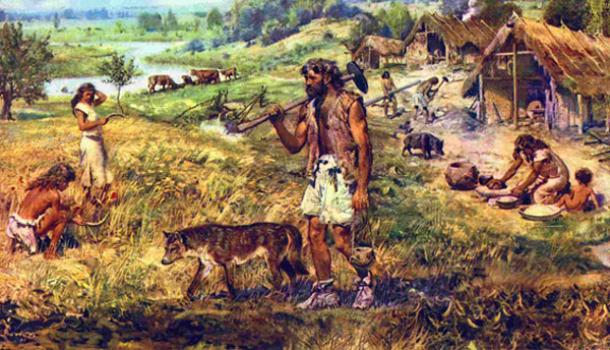
neolithic-farmers

Neolithic man – early farmers


Firstly I will explain quickly at how and why these conditions changed, and then I will explain why this is important to us today.


First of all, the change from hunter-gathering to farming meant some major social changes for ancient humanity.  Farming allowed people to stay in one place and create fixed communities.  This meant that individuals had to specialise.  One person could grow wheat, another beans, another could raise cows for meat and milk.  Farming allowed humans to create an excess that could be stored or bartered.  Having an excess of food allowed us free time away from farming to develop skills such as tanning, crafts, and metalwork.  These skills allowed individuals to create, and exchange their skills or creations for food or other people’s creations.  These skills often allowed humans to make more food, more efficiently, and build up a greater excess and therefore have more free time for practising their own skills.  But some of the creations were weapons.  Even the finest stone weapons are no match for the worked-metal weapons of the Bronze age.  

Bronze_Age_Swords

bronze-age weaponry was better than stone-age weaponry.


Weapons allowed some communities to dominate other communities and demand tribute.  Weapons allowed a warrior class to exist.  This warrior class did little or no work themselves.  They claimed leadership rights and the ability to impose their own rules or laws over the places they dominated.  They quickly learned to legitimise their rule by claiming that God (or the Gods) gave them the right to rule, to make it not only illegal but also a sin to dispute their rule.  And from there on, in Britain at least, not much has changed.  Our monarch still rules by the gift of God, our soldiers swear allegiance to the Queen rather than to the people, and much of the country is still owned by people whose land was given to them by previous monarchs, monarchs whose right to rule was based on having a bigger army and more soldiers than anyone else.  The myth is that our laws, our government, our society, is modern and progressive, but all those things are based around one bunch of blokes being tougher than another bunch and getting to tell everyone else what to do.


Dominating lands gave you the ability to claim a tithe (in terms of crops, labour, or taxation) on that land (as mentioned earlier), or just take everything and pay your workers what you believed their labour was worth.  At many points in history, this worth has been very low, sometimes far below that which is necessary to keep people healthy – literally starvation wages.  Changes in conditions that favour the workers have been rare.   In the 1300s, after the “Black Death” had killed two-thirds of the English population, peasants were able to sell their labour for much more money due to the lack of healthy workers available.  The rulers of England weren’t having this, and passed a law, the Statute of Labourers which limited the amount of money people could demand, and making it illegal to move around to get a better deal.  As a result of the labour shortage, very little bread was available, making bread more expensive, and so people were forced to work, facing imprisonment if they didn’t, but they couldn’t afford to feed themselves on their wages.  This was one of the factors that led to the Peasant’s Revolt of 1381

peasants_revolt

The Peasants’ Revolt of 1381.  Not pictured: London on fire.


As the amount of human beings increased, and technology got better, the amount of surplus production increased, and the amount of wealth that could be claimed from the land increased.  There developed a group of people who managed trade on behalf of the landowners.  They did not own the land or provide the money, but they were paid to ensure that the maximum amount of wealth was generated for the landowners.  These people became increasingly wealthy themselves, many of them came to be landowners and business owners in their own right.  This group of people became known as the bourgeoisie in France, though they are generally known as the middle classes in the UK.  However, as they were not kings and aristocrats, they had no say in governing the country.  Many of them felt that they should have a say or objected to the king spending their tax-money on his own luxury, or on wars that damaged trade.  European countries were always at war with each other.  This led to a series of revolutions across Europe from the 1600s to the 1900s as the middle classes struggled against the kings for power.  In almost every case, authoritarian  rule by the king and the aristocracy was replaced by some form of parliament, with the middle and upper classes electing members of parliament.  In many places the kings survived in some form or other.  In Britain, eventually the two factions settled on a parliamentary monarchy, whereby the aristocracy are allowed to keep most of their privilege in exchange for letting the middle classes run the country and have a share of the wealth.  For how parliament used the law to formally take land from poor people’s use and give it to the wealthy, see my earlier essay.   The monarch has to give their permission to all the laws made by parliament.  It is generally considered that if she did not, then parliament would abolish the monarchy.  So that this doesn’t happen, and the monarch and the prime minister have weekly meetings to ensure that parliament isn’t doing anything the monarch might object to.  This is called liberal democracy.


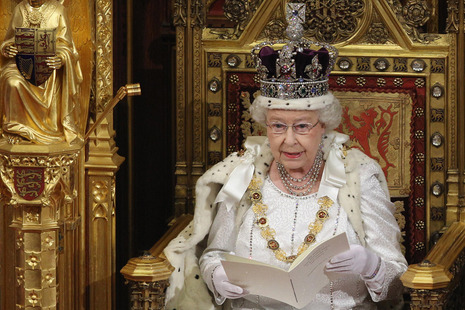
Britain Queen's Speech

The Queen demonstrating the British state’s commitment to democracy and equality of opportunity.


During the Labour government under Blair, the hereditary powers of the aristocracy were further eroded, as the House of Lords was reformed.  By removing the right of most aristocrats to sit in the Lords, we replaced an unelected second chamber of the upper classes with an unelected chamber of government appointees.  This is supposed to be fairer, but is just another undemocratic gravy train, this time favouring the political middle classes.  It is used to bribe MPs and civil servants, business owners and charity workers, awarding them a healthy living and the illusion of being able to change things in exchange for them playing along with the government of the day. Incidentally, there are lots more Lords than there are elected MPs.  The greater part of Britain’s politicians are not elected.  Democratic choice is only a minor part of our system..

This process, by which the middle classes mostly gained the ability to control their own wealth, set their own taxes, and dictate the terms of employment, prepared the ground for the modern capitalist state.

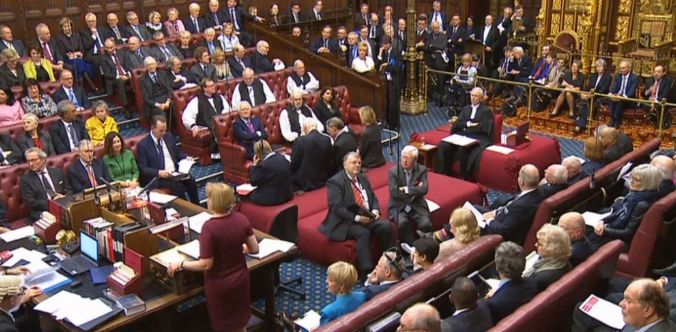
ad_235830144

Lots of democracy and accountability going on here, at a vast cost to the taxpayer.

This historical stuff is important because it allows us to see the set of conditions under which Britain is governed; Britain’s laws and economics and traditions have arisen through conflict between the upper and middle classes.  It is these two groups who have collaborated and squabbled to create a system which works for both of them without leading to direct conflict between them.  Laws are only made that benefit them.  Any changes that benefit us are made only as compromise when threatened, or to buy us off.  No improvements have ever been made to our conditions that have not been fought for, and often died for, by working class people long before anyone took up our case in parliament.


All of which leads us to the main points about working for a living:


  1. Because we own neither money nor land nor factories we must sell our physical or intellectual labour in order to survive.
  2. Employment exists because the employing class took from everyone else the ability to provide for themselves and their ancestors refuse to give it back or share.  The entire system is and always has been about their needs, their laws, and their property “rights”.  


The relationship between employer and employee is almost always based on exploitation.  Even some very well paid people are only paid a fraction of what they are worth.  The difference between the amount you are paid and the amount of money you generate for the business is called “surplus value”.  Only at the very top is this relationship not always exploitative.  Directors and other members of the executive classes are often paid many times their surplus value, because the people who set their pay have class loyalty and they expect to be paid this way themselves.  We regularly see Chief Executives and Directors given performance bonuses despite running the business into the ground.  We get laid off for their failures, they get performance bonuses and “golden umbrellas”, then get another job somewhere else and do it all again.  This is class consciousness at work amongst the upper middle classes.  


Sometimes the relationship between employer and employee can be pretty good – you might find that the employer pays well for your work, provides you with rights over and above the legal minimum, and pride themselves on being “a good employer”.  You may get on well with your manager, or the company owner.  But those things don’t change the economic facts.  But even when you and your boss get on well, and your pay and conditions are good, the relationship is still exploitation. You are still generating profits for someone else, rather than receiving an equal share.  Once you stop generating profits, you will be let go.  You have no ownership over your work, your only incentive to work is either the need to look after your family, or sheer greed.  And you might ask yourself, if I don’t get paid enough to look after my family, and I’m not greedy, then why should I work?  You wouldn’t be the first to ask that.  

factory-work

These workers are making an informed and free decision to work rather than starve.

Capitalism is both an economic system and an ideology.  As an economic system it means that private individuals rather than the state provide services and own everything.  Many pro-capitalists claim that capitalism is not an ideology, and that capitalism is merely a description of a set of economic conditions.  This is a dishonest claim, and is only made to deflect from criticism (both fair and unfair) of capitalism.  They want us to believe that capitalism is a neutral position, rather than one in which there are lots of values, both implied and stated. There are a number of strands of ideology within capitalism, all of which compete with each other for political control.  All capitalists agree that the pursuit of profit is the main and best incentive for human achievement, and that is is desirable that this should be the basis of a political system.  They believe that this brings out the best in human beings, and conforms to human nature.  All of them seek to increase profits year-on-year, or quarter-on-quarter. This pursuit of growth rules our society and dictates all policy from there.

growth

The global fantasy… being able to extract infinite profits from finite resources.

Once examined, this seems both impractical and impossible.  If, for example, you make profit of one million pounds in the first year, then profits of only three-quarters of a million pounds the second year, then you are failing to deliver growth and your prospects for economic success are low.  Growth can be created in a number of ways.  Through increased sales; through technological improvements making it cheaper to create your product; through developing new products or finding new people to sell your product to; by finding cheaper suppliers; by reducing your margins (using less ingredients / parts but charging the same price); by reducing labour costs in various ways.  All companies use every one of these methods, all at once and constantly.  So why is it impractical and impossible?


The answer to this question is huge and complex.  I will not be able to cover everything.  But we can give it a good try!  

It is impractical because it reduces every idea and interaction into units of profit regardless of the success or failure of the product, environmental or human cost.  It creates both artificial scarcity and artificial glut depending on whether it suits the owners better to flood the market or starve it.  It encourages dishonesty and unpleasant behaviour.  We measure human success only by money generated and not by anything meaningful.  Development is based on profits, not social usefulness.   Money is all that counts.  Surely you are worth more than the profit you can generate for your boss?  Capitalists claim that the “invisible hand of the market” resolves all issues.  For example, human beings are fishing the oceans clean of fish.  Bluefin Tuna is almost extinct.   Capitalist theory supposes that if we want tuna in the sea, we should be paying people more money to not fish tuna than they earn by fishing tuna.  The argument goes that we clearly don’t care about the oceans or we’d pay for it.  As if we can afford it!  (It is worth pointing out that attempts have been made to pay people not to fish, using state wealth to fund the payments.  Free-market capitalists have generally done their best to stop this from happening through a variety of political and legal methods.  The payments should be made by individuals, according to them, not from taxation).  The “invisible hand of the market” assumes that all possible options are both affordable and available.  Capitalism, through advertising and marketing, creates the illusion of choice, whilst decreasing the amount of real and meaningful choices you have.  Capitalism without state intervention to direct it creates stagnant economies, massive wealth inequality, and reduces all value judgements to “will it make a profit”.  This is where we are now – massively in debt (both as individuals and as a country), with everything owned by a few corporations who rely mostly on cutting labour costs in order to continue growth.

Large_bluefin_tuna_on_deck

Of the many ways to create growth, the only one that is guaranteed to work is cutting your labour costs.  If you haven’t developed successful new products, found new markets, gotten cheaper parts, etc., then you need to get your workforce to do more for less.  You can’t make people buy your products, but what you can control is how much you pay in wages.  So below inflation pay rises, or no pay rises at all increases profit for the employer.  Getting staff to be self-employed and pretending it’s their choice increases profit.  Moving your factory to China certainly increases profits.  When all else fails, the workers get screwed, not the shareholders.  That’s growth!

2download

It’s cheaper to make these toys and ship them to England, than it is to make them in England. 

The pursuit of growth  is absurd because it doesn’t reflect reality.   Growth is alright, but it isn’t everything..  If my business costs 1 million pounds a year to run, then really i only need to make 1 million and 1 pounds a year.  Anything above that is all good.  Profits being down isn’t a tragedy, it’s just a bad quarter.  You can run your business for years without having significant growth but also without losing money. So why do capitalists pursue growth above all other things?  It’s nonsense.  It’s just greed.


Profits are greater now than at any time in human history, but they are not growing – the richest people in the country own a bigger share and pay less tax than at any time in modern history. But at the same time, we are living under austerity?  How can we be fabulously wealthy and also broke?  It is impossible because we are a finite world, and we only have so much to go round.  We are seeing capitalism unable to generate new markets any more, and because the rich don’t pay much tax, countries are poorer, which means that their people are poorer and unable to buy as much stuff.  So now profit is coming from wealth generated through transferring tax money to the private sector through privatisation, and through cutting wages, and expecting people to do more work, and avoiding taxes.  Wages are falling in Britain, but profits are growing because of this.  People are not spending more, instead they are earning less.  The economy is increasingly reliant on lowering wages to maintain (meagre) growth.


There are many different forms of wage lowering used by employers, with varying degrees of legality.  Many businesses transfer their skilled jobs overseas, to countries where wages are lower or labour laws not so strict.  Some countries encourage this by creating Economic Zones where business taxes are low or non-existent.  Many countries have little or no regulation of work, meaning that they can use actual slavery.  How can we compete with that?  The results of this “globalisation” is that there is less skilled work available and thus skilled workers are forced to compete with each other to see who will accept the lowest wage, and the worst conditions.  This is happening with qualified work as well, and increasingly the university educated worker is discovering that they are unable to find well-paid work that is relevant to their degree..  


In a similar process, where work in the UK cannot be moved to where labour is cheaper, competition needs to be created here.  This is where immigration comes in.  You might have asked yourself why the EU keeps getting bigger, taking in more and more countries, whose people then can move freely to the UK (and the other wealthier countries of the EU) and work?  Each extension of the EU opens the job-market to progressively poorer countries, using their workers to provide competition to existing labour, and opening their resources to easy exploitation by EU-based corporations.  The mainstream media, both pro- and anti-European, like to give the impression that we allow all these people to come here because we’re nice.  Immigration, the message goes, makes us all better people, is a kindness to those who want to come here to work, and all of that.  But in reality immigration is used to push down wages at the low end.  During the EU referendum debate you might have seen denials that immigration pushes down wages, stats showing that immigration increases GDP and so on.  But immigration doesn’t push down wages for the middle and upper classes – for them immigration is an opportunity to work in different places, or to find skilled foreigners to fill managerial and professional roles.  But immigration pushes down wages for those of us at the lower end of the pay scale.  Who is going to pay us a living wage to pick vegetables when you can pay an agency to ship in transient workers on below minimum wages?  And this is happening all across the UK.  We’re being told it’s not, but our own lived experience tells us otherwise.  Much of the low paid, or seasonal work, is now being done by immigrants from countries where there is no welfare and little work.  In London, where cleaners used to be working class mothers, students and grandmothers earning a bit more money, they’re now African or South American and struggling to survive on their wages.  In Lincolnshire, where food pickers used to be local, they’re now Eastern Europeans living in barns and bunkhouses, paying rent out of their wages, plus a cut to agent that found them the work.  When such jobs are available, the pay is so low you can’t afford your family’s food and rent, so you can’t take the job, and then voices in the media call British workers lazy and talk about cutting benefits unless you work.

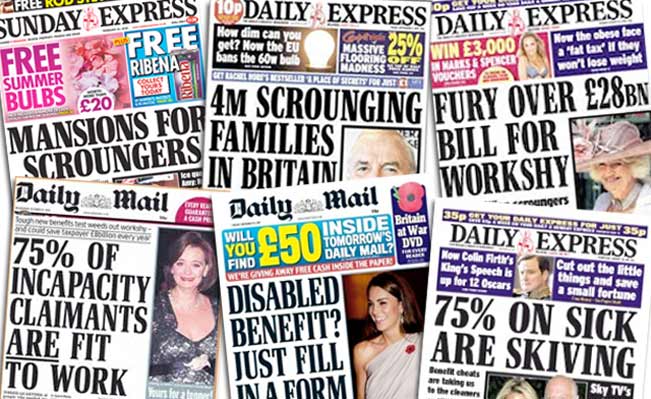
scroungers_headlines_lg

What a lot of nonsense.

Some people blame migrant workers for this, which is putting the cart before the horse.  The blame has to lie with the person who exploits, not the exploited themselves.  Blaming the victims for the conditions imposed upon them is always wrong.  People who want you to blame the immigrants rather than the employer or the system are trying to distract you from the real problems in society.


The next way that capitalists create profit from wages is unpaid labour.  This takes many forms.  Firstly, there are programmes for the unemployed that provide businesses with thousands of hours of unpaid labour every week, every hour of that labour saves them money and increases their profits.  Every hour of that labour is work taken away from someone who needs it.  This labour doesn’t replace work for middle and upper class people of course.  And you need to do it in exchange for your benefits.  So in the end you’re doing the same job you did before, but for no money!  When they replace a paid job with an unpaid job, that’s a person on benefits and not paying tax.  Unpaid labour takes from the state and the taxpayer, and gives to the corporation and shareholder.  Likewise, when a job pays so little that the worker needs top up benefits, the taxpayer is subsidising the employer’s profits.  If the employer needs state benefits to top up their employee’s wages, it’s a failing business by any meaningful analysis.  If it’s a profitable business that can afford to pay better but doesn’t as that would eat into profits, then that business is stealing from us taxpayers.

unpaid-internshipa5dd579a50cd6a04a19bff0000c565b1

Work for free ensures that only the wealthy get work experience.

Other ways in which capitalists create profit from unpaid labour is in prisons, where prisoners work for pennies an hour, redeemable against inflated prices in the prison shop.  There are punishments for prisoners who won’t work.   Many prisons are privately run, their owners incentivised to cut costs and conditions and create dangerous environments for both prisoners and guards.  Remember that capitalists profit from prisoners.  Politicians and judges are also business owners, board members, and shareholders that profit from every working class man or woman sent to prison, whilst the wealthy hire expensive lawyers to keep them out of prison at all costs.  Justice is not blind.  A working class person is more likely to be arrested, charged, and convicted.  Middle and upper class people, if convicted, receive lower jail sentences than their working class peers.  Meanwhile those who won’t turn to crime have to compete with prison labour to see who can provide the cheapest workers.  Whether you’re a criminal or not the prison system harms you.

download

Prison labour is little better than slave labour, and takes jobs from working class people.

.  

In terms of employment, there’s only really one thing you can do to improve our conditions.  Where we have work, we can join unions.  Unions are mostly toothless these days, and many of them are run by the same class of people who run the businesses.  I know of more cases than I can count where unions have failed workers, either as individuals or as a class.  However, they are (only just) better than nothing, and it remains illegal to sack a worker for joining a union, for union activities, or for agitating for better pay and conditions.  Sometimes even fighting and losing is better than accepting things as they are.  


Not all workers are employed, of course.  At any given time there is a group of unemployed workers looking for a job.  Where workers are scarce, wages go up.  Where workers are easy to find, wages go down.  This is another reason why Britain is always importing workers from abroad (not to mention that this saves the British state money, as another country has paid to educate and train those workers).  The zero-hours phenomenon has been fantastic for both employers and the state, as it means that a worker can simultaneously be unemployed and working!  But zero-hours workers find that they are poorer than ever and competing with their class-peers for the tiniest scraps of work.  


As we can see, the end result is always the same.  We are poor because our ancestors weren’t rich.  We are poor because their system is failing us.  We work harder and receive a decreasing share, whilst profits soar.  This cannot continue.  We are poor because work does not pay enough to live on, because our labour is not remunerated fairly, and we are poor because our poverty is necessary for their wealth.


Further Reading:

On the Enclosures Act: http://www.thelandmagazine.org.uk/articles/short-history-enclosure-britain

On early humanity:

http://www.essential-humanities.net/history-overview/stone-bronze-iron-ages/


On the Peasants Revolt of 1381:

http://www.bbc.co.uk/bitesize/ks3/history/middle_ages/peasants_revolt/revision/1/


On the French Revolution as a bourgeois revolution

https://www.worldsocialism.org/spgb/socialist-standard/1980s/1989/no-1019-july-1989/1789-france%E2%80%99s-bourgeois-revolution


On the English Civil War

https://en.wikipedia.org/wiki/English_Civil_War


On how British parliament works.

https://en.wikipedia.org/wiki/Constitution_of_the_United_Kingdom


On the ideologies of capitalism and growth

http://www.globaljustice.org.uk/myth-4-all-you-need-growth


On profits

Google search “record breaking profits”!

On the effects of unpaid work

https://www.theguardian.com/society/2017/apr/15/unpaid-internships-soar-poorer-graduates-struggle-ippr-study

https://www.oecd.org/dev/development-gender/Unpaid_care_work.pdf


On the gap between profits and wages

https://www.ft.com/content/83e7e87e-fe64-11e6-96f8-3700c5664d30


On immigration and wages

http://www.migrationobservatory.ox.ac.uk/resources/briefings/the-labour-market-effects-of-immigration/


On how prison labour destroys jobs and wages for working class people

http://anotherangryvoice.blogspot.co.uk/2016/08/the-uk-prison-labour-industry.html


On the use of self-employment to save employers money and steal from workers and the taxman

https://www.theguardian.com/commentisfree/2017/mar/13/bogus-self-employment-exploits-workers-scams-tax-philip-hammond-national-insurance-uneven-taxation

https://www.citizensadvice.org.uk/Global/CitizensAdvice/Work%20Publications/Neither%20one%20thing%20nor%20the%20other.pdf


Why is housing so expensive? Part one

This is a big question, so we’re going to break the answer into a two posts.  Firstly, we’re going to look at land ownership.

To begin with, a question.  Who owns England?  Have a think about it.  There are a number of common answers to this question, and most of them are wrong.  For example, do the people of England own the country?  Absolutely not.  Not a square centimetre of England is owned by the people of the country.  The entire country is owned by The Crown.  

The Crown is the name given to the legal entity of the British State.  By legal entity, I mean “an association, corporation, or individual that has legal standing in the eyes of law.”  A legal entity has capacity to enter into agreements or contracts, assume obligations, incur and pay debts, sue and be sued in its own right, and to be held responsible for its actions..  It is represented in person by the Queen but is also (and at the same time) the British state itself – the government, the land, and the legal system.  This is nothing to do with all that Legal Name nonsense seen on billboards over the last few years.


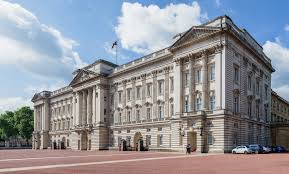
BuckinghamPalace

The Crown is the British government, and Britain, and the Queen, all at the same time.


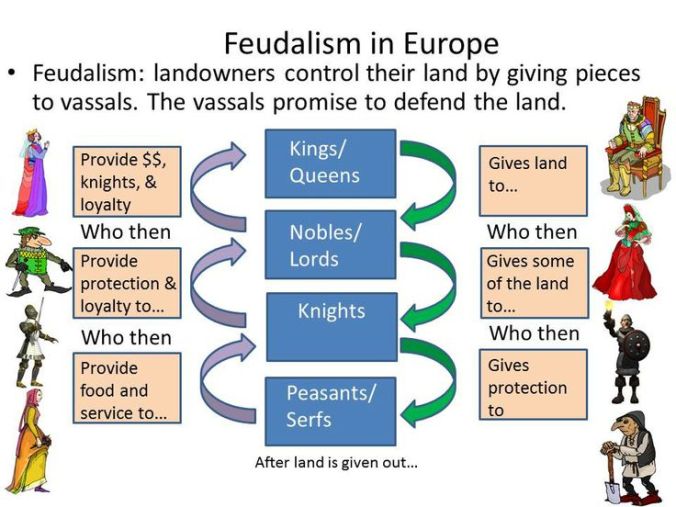
Everyone in England is a tenant of The Crown.  This is because our land laws are loosely based on a combination of Anglo-Saxon and Norman feudal laws.  (Once the monarch dispensed land to his barons, who owed the monarch obligations in return.  The barons divided this land amongst their knights, who owed the barons obligations in return.  The knights divided this land amongst their squires who owed the knights obligations in return.  The squires divided this land amongst their tenants, who owed the squires obligations in return.  These obligations took the form of tithes (a share of the crops), cash rents, and/or military service.)  

The two types of tenure that exist in the UK are freehold, and leasehold.  Freeholders own exclusive rights to use their land for set periods (often 999 years, renewed whenever the land is sold); leaseholders have limited rights to use their land for shorter periods, and often have to pay service charges or land rent to the freeholder.  When we talk about landowners, or homeowners, we’re actually talking about people who are tenants.  Their tenancy is long, and generally they can do what they like with their property, so to all intents and purposes they own it.  But nevertheless, the British state, that is The Crown, sees them as tenants (and probably has the same attitude toward them that your landlord has towards you).

how feudalism worked

this is the basis of our current land ownership and laws in the uk.

So now we understand that The Crown owns England, and everyone else is a tenant of The Crown, we need to look at landholding (landholding refers to the people who own or manage land or property) more clearly.  From now on, when I talk of ownership, I mean the freeholder of any piece of land.  In almost all cases, the freeholder is the effective owner of land and they reap all the benefits of ownership. We could also use the word ‘control’ to describe their relationship to the land.  

About 32% of Great Britain is owned by the Crown Estate (on behalf of the Queen and Royal Family), the aristocracy, the titled nobles such as Barons, Lords, and Duchesses), mostly land granted to them by various monarchs from 1066 onwards.  That’s a third of the country, still in the hands of the ancestors of the original thieves.  There used to be land in the UK that was known as common land, and all were entitled to use this land.  This common land allowed landless British people to survive by being able to graze animals and maintain themselves.  However,between 1604 and 1914 laws were made to gift this land to the aristocracy and other wealthy citizens, and made huge numbers of the rural poor unable to feed themselves.  

At much the same time many of the ruling classes had urban factories that they needed labourers to work in.   Some historians have suggested that these two facts were connected, whilst others claim that the two were completely unrelated and a matter of coincidence.  

Once there were millions of acres of open fields and common land, now those commons exist only as fragments and no-one can use them to support themselves.  The ancestors of those who took the land often still own it, whilst the descendents of the rural poor are generally still poor themselves.  The land and wealth are as linked now as they have ever been.


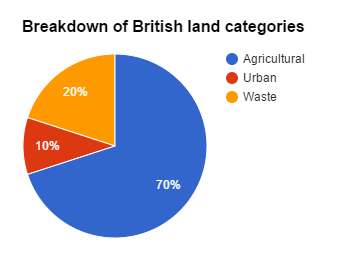
Land in the UK comes under three categories: Agricultural (farms etc); Urban (homes and shops and factories – including cities, towns, and villages); and “natural waste” (mountains and other land unsuitable for farming).  There are 42 million acres (an acre is about the size of half a football pitch) of agricultural land.  There are 12 million acres of natural waste.  There are 6 million acres of of urban land (of which about 3 million acres are actual homes)..  As you can see, urban land takes up very little space in the UK.  

Breakdown of British land categories

Britain isn’t over-built. We just need laws that favour the best use of land.


If you are the owner of any of that 42 million acres of agricultural land you qualify for a handout from the taxpayer, whether or not you grow crops, raise animals, or leave it alone.  This amounts to £5 billion pounds a year (in 2010).  This goes to the landowner.  It is called the Single Farm Payment, sometimes described as a subsidy to protect farmers from cheap foreign imports (which is doesn’t do very well), but in reality it is a reward for owning land, paid for by the rest of us through our taxes.  It is unconditional, which means that it doesn’t matter how rich you are already or what you are doing with your land, you still receive it.  Compare this to means-testing of benefits.  In fact, the more land you own, the more money you are given.  As a point of comparison, in 2014 the government spent £3 billion pounds on unemployment benefits.  How can it be right that more of our tax money is spent on rewarding landowners than preventing the unlucky from starving?  I thought Britain was supposed to be broke.


As we see, Britain spends a huge amount of money of rewarding wealthy landowners.  Many of these are people who bought that land as an investment, because of this income and from the increase in land values over time.  We don’t know exactly how much each person gets, because the government won’t tell us.  But we do know that the average is about £20,000 each.  Not bad, eh?  In Scotland we know that the single biggest payment in 2009 was £1.2 million.  The smallest landowners receive very little – that’s 65,000 people who have farms of 2 acres or less.  They don’t get much.  But the biggest get a lot.  So how does that affect the price of houses?


This creates a system where land is valuable for reasons other than its use.  Without this reward, landowners would have to decide on the most economical use of their land.  With it, the land becomes more valuable than its actual worth.  It becomes a good investment to own this land rather than build on it.  We are, in fact, paying the wealthy not to build on their land at a time when housing is desperately needed.

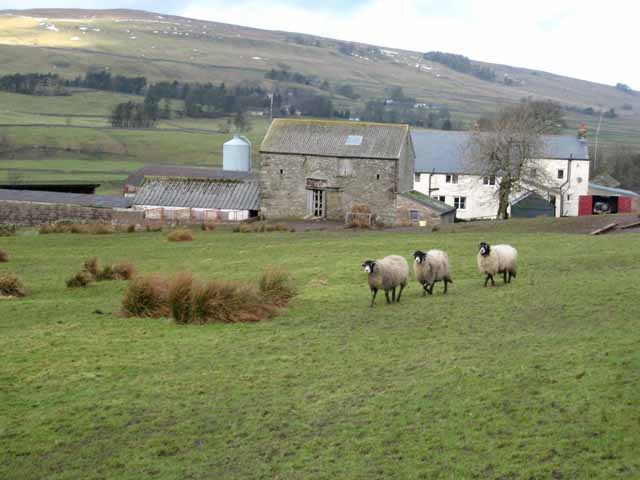
a british farm

this farm might earn more money from the Single Farm Payment and subsidies than it does from farming

One tiny ray of light – because this payment is arranged by the EU through something called the Common Agricultural Policy, it may be that after Brexit this payment no longer takes place.  If we are lucky it can be replaced with something sensible that protects the smaller farmers without rewarding land ownership and distorting land prices across the country.  The current Conservative government however has claimed that they might increase it after Brexit.  We can only hope that this does not happen.


It gets worse though.  Despite the best efforts of the Land Registry, roughly half of British agricultural land is either unregistered, or is registered to offshore companies.  This makes it almost impossible to know who really owns the land, or what they are doing with it, or intend to do with it.  This in turn makes it very difficult to plan towns and estates.  It allows landowners to effectively volunteer their land in exchange only for huge amounts of money.  By only releasing land in small plots for high prices, Britain’s landowners massively inflate the price of housebuilding.


It gets worse though.  To understand how this is, we need to go back to two previous Prime Ministers – Margaret Thatcher and Tony Blair, and even earlier than that, to 1950s Tory Minister of Housing and aristocrat Edwin Duncan Sandys.


To be continued…


Hard Work, Poverty, and Reality.

Why are we poor?  Is it because we don’t work hard enough?


We all know that hard work equals success, don’t we?  On the TV, in the papers, on the internet, the message is everywhere.  If you work hard you will get rich.  If someone is poor, surely then it is because they didn’t work hard enough, they didn’t want enough to be rich.  Therefore anyone poor obviously doesn’t care about being rich, they don’t want to work hard, they’d rather not put in the hours necessary to get rich.  


Isn’t it easy to believe this?  Certainly, rich people believe this to be true.  Self-made rich people definitely believe this to be true – and for them, it IS true.  They worked hard, they got rich.  Therefore everyone can do it.  But can they?


First of all, we need to define “hard work”.  What does “hard work” mean?


Does it mean the same as heavy physical labour – work that is physically hard to do?  If you do hard work, will you get rich?  Looking at some of the hardest work possible, that of labouring, we see that it definitely won’t get you rich.  Up and down the country, outside DIY stores and similar places, we see groups of men waiting, hoping to be hired for a day’s work.  The rates are below minimum wage, often as low as £20 for a day of lifting and carrying, clearing building rubbish.  This hard work won’t get you rich.  But this is illegal, of course.  Both worker and boss are breaking the law, and that might be why the pay is so bad.  Surely legal hard work will get you rich?  


Work doesn’t come much harder than being a hod carrier.  Bricks are heavy!  Searching today (I wrote this in 2016) on indeed.co.uk, we can see that there are 130 hod carrier jobs being advertised. Just over two thirds of them (67%) have wages of less than £20,000 per year, and only 6% have wages of over £35,000 per year.  Only 1 of these 130 jobs are advertised as permanent.  So you can see, it’s possible to do OK as a hod carrier, but you won’t get rich.


There are plenty of other hard working jobs though.  Warehouse Operative is a very common job these days, and is widely accepted to be heavy labour.  Searching for the word “warehouse” on indeed.co.uk we can find 10,749 jobs available, of which 80% offer less than £20,000 per year.  It seems like you won’t get rich this way either.


Perhaps “hard work” means using your body to develop physical skills – footballers are paid a lot.  Perhaps you can get rich that way.  


Well, if you’re out of school and not already a footballer, it’s too late, and even if you are, the Professional Footballers Association state “Of those entering the game aged 16, two years down the line, 50% will be outside professional football. If we look at the same cohort at 21, the attrition rate is 75% or above.”*  You need to have made that decision as a child and worked towards it from there and even then you’re almost certain not to be a professional.  The same applies for all other sports.  Hard work might get the best of the best very well off, but for most sportspeople it’s done for the love.  


Perhaps “hard work” refers to jobs that you need to be clever and put in long hours to do.  Nursing is a job for clever people, and they work long hours.  Yet of the 35,000 or more jobs advertised using the tag ‘nursing’ on indeed.co.uk, more than a third (35%) of them pay under £20,000 per year.  You can do better nursing than you can as a hod carrier though, as senior workers in the private medical sector can do better than £45k per year (according to indeed.co.uk).  Teaching perhaps?  You could earn up to 50k per year as a senior teacher, perhaps even more in management.  Even though £50,000 is rich to us, it’s certainly not rich by the standards of wealth.  We can see that if you were lucky enough to grow up with a home life that meant you could concentrate on your studies, and a good education, and then made the right career choices, worked hard and didn’t get ill or unlucky, you could earn a decent living.  That’s a lot to ask, isn’t it?


So when people say that hard work gets you rich, they don’t mean all hard work.  They certainly don’t mean hard work on its own.  They mean hard work combined with the right conditions.  And those conditions are not available to everyone.  If some of these conditions aren’t in place, no amount of hard work will make you rich.  And, as we’ll see, the important factor in getting rich is not actually hard work, but the other conditions.  Hard work is actually a meaningless factor for most of the rich, but one which they usually say is the reason for their wealth.  They claim to have worked hard, whilst ignoring the other factors.  It means they can make themselves seem deserving, rather than lucky.  It means they can blame people’s poverty on laziness and poor life choices, rather than to bad luck or systemic** factors.  


It is clearly a lie that hard work is why the rich are rich.  We are poor not because we don’t work hard, or because we are lazy.  We are poor because the system is not designed for us to get rich.  We are poor because only the luckiest individuals can get rich, individuals with the right connections.  We are poor because we were born into a society which is set up so that most people always get a raw deal, where the possibility of getting rich gets smaller every year, and where the myth of hard work keeps us working hard for wages that are not enough to live on, or shames us when we want to work hard but there are no jobs for us.


* http://www.bbc.co.uk/sport/football/28950665


**systemic when I talk about “systemic factors”, i mean factors relating to the different systems that make up the society we live in.  For example, business and trade, education, the economy, health, and the law are all systems, as is the government.